
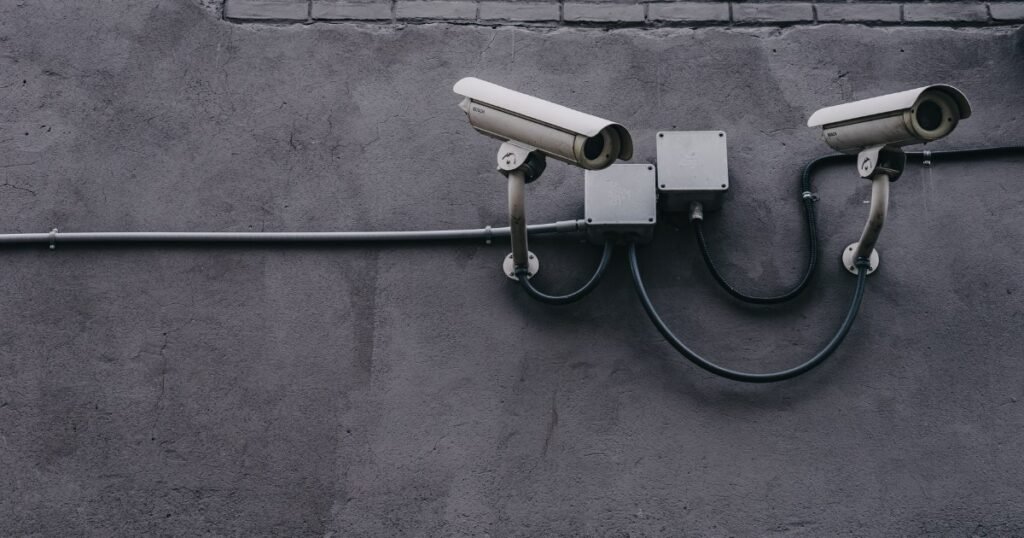
CCTV is one of those purchases where the equipment itself is easy to find and the installation is where things quietly go wrong. Cameras are sold everywhere, at every price point, and it’s entirely possible to buy good hardware and still end up with a security system that has blind spots, unreliable footage, or a recorder that fails exactly when you need it most. Here’s what actually matters before you install.
Camera Count Matters Less Than Camera Placement
A common assumption is that more cameras equals better security. In practice, four well-placed cameras covering the right entry points, corridors, and blind corners will outperform eight cameras poorly positioned around a property. Placement should be planned around how someone would actually move through or into the property — main gate, side entrances, parking areas, and any point where a fence or wall is easier to cross than it should be — not just spread evenly around the building.
This is also where a proper site survey earns its cost. Someone walking the property, checking sightlines, and identifying where lighting is poor at night will catch blind spots that aren’t obvious from a floor plan alone.
Resolution Is Only Useful If the Footage Is Usable
A high-resolution camera pointed at a poorly lit area at night, or angled so far away that a face is a handful of pixels wide, doesn’t give you much more than a low-resolution one. Resolution matters, but it has to be paired with the right lens choice for the distance being covered, and adequate lighting or infrared capability for nighttime footage. If footage needs to be usable as evidence — identifying a face or a vehicle plate — that requirement should shape both the camera choice and its placement, not be an afterthought discovered after an incident when it’s too late to fix.
Storage: The Part Everyone Forgets to Ask About
It’s common for a CCTV buyer to focus entirely on the cameras and barely think about the recorder and storage until footage is actually needed — at which point they discover it was overwritten three days ago. Decide upfront how many days of footage you actually need retained, and make sure the recorder and storage drives are sized for that, with some buffer. For a home, a week or two might be enough. For a business, government facility, or place with higher security requirements, thirty days or more is common, and the storage hardware needs to be built for continuous recording, not a repurposed consumer hard drive that wasn’t designed for the workload.
It’s also worth asking whether footage is stored locally, in the cloud, or both. Local-only storage is vulnerable if the recorder itself is stolen or damaged during a break-in. A cloud backup, even just for key cameras, removes that single point of failure.
Power and Connectivity Are Not Small Details
Nigeria’s power situation makes this more important than it might be elsewhere: a CCTV system is only useful if it’s actually running when something happens, and that means planning for outages, not just normal operation. A proper installation accounts for backup power for the recorder and key cameras, so a few hours without grid power doesn’t leave a property unmonitored exactly when opportunistic incidents are more likely to happen.
Cabling matters too. Wireless cameras are convenient to install but are more vulnerable to interference, signal dropouts, and, in some cases, easier tampering than a properly cabled system. For anything beyond a small residential setup, wired cameras with a stable power supply are usually the more reliable choice, even if the installation takes a bit longer upfront.
Remote Viewing Should Be Secure, Not Just Convenient
Being able to check camera footage from a phone is a genuinely useful feature, but it also means the system is now connected to the internet in some form, which introduces its own risks if not set up properly. A system installed with default passwords, no firmware updates, and an exposed network port is a security camera system that’s ironically easier to compromise than the property it’s meant to protect. Proper installation includes securing remote access, not just enabling it.
DIY Kits vs. Professional Installation
Off-the-shelf CCTV kits have their place for very small, simple setups. But most of the mistakes described above — poor placement, inadequate storage planning, no backup power, insecure remote access — happen precisely because a kit was self-installed without anyone assessing the property as a whole system. Professional installation isn’t just about mounting cameras; it’s about designing coverage, storage, power, and access together, so the system actually does what it was bought to do when it matters.
Getting It Right the First Time
A CCTV system is one of those purchases where fixing mistakes after the fact — repositioning poorly placed cameras, upgrading undersized storage, adding backup power retroactively — usually costs more than getting the design right before installation.
Revolux Technologies designs and installs CCTV and electronic security systems built around how a property is actually used, with proper attention to placement, storage, power backup, and secure remote access. If you’re planning a new installation or reviewing an existing one, get in touch and we’ll assess the property before recommending anything.