
Smart home automation gets marketed as a luxury add-on — voice-controlled lights, an app that dims the living room. That framing undersells what it actually does well in a Nigerian home, where the more valuable use cases are reliability, security, and dealing sensibly with an unreliable power grid, not just convenience. Here’s a grounded look at what it actually delivers, and where it doesn’t.
What Smart Home Automation Actually Covers
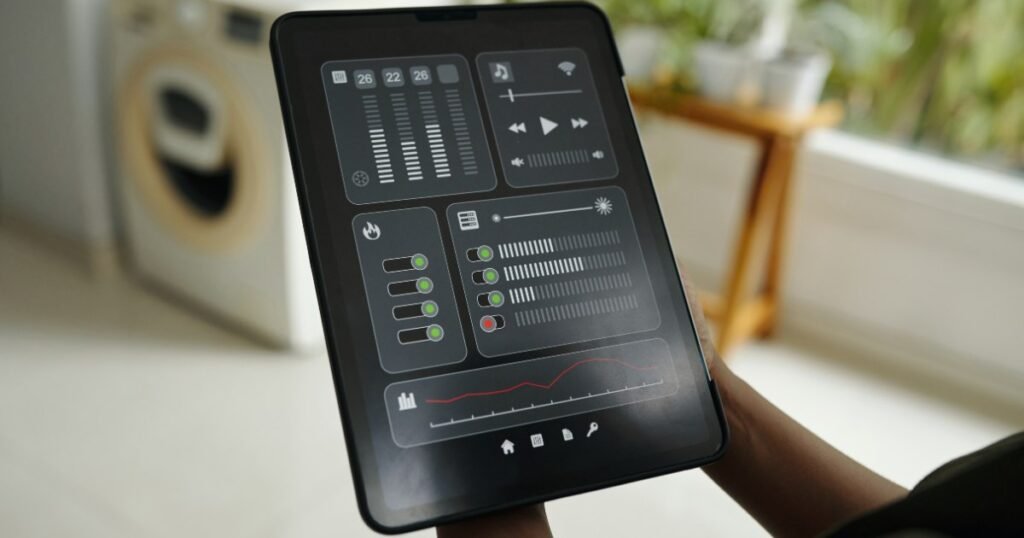
At its core, a smart home system connects the things a home already has — lighting, security cameras, gates, air conditioning, backup power, sometimes water pumps and boreholes — into a single system that can be monitored and controlled from one app or panel, instead of managing each one separately. The value isn’t the novelty of controlling a lightbulb from a phone. It’s not having to physically check whether the gate is locked, the generator has switched over, or a camera caught something, because the system already tells you.
Where It Delivers Real Value in a Nigerian Context
Power management is the single strongest case for automation here. A system that monitors grid power, automatically manages the transition to inverter or generator backup, and alerts you if a critical circuit loses power entirely turns a common daily frustration into something handled quietly in the background. This matters far more in Lagos or Abuja than in markets where smart home marketing was originally built, which is part of why a generic imported system rarely fits well without proper local configuration.
Security integration is the second strongest case. Linking CCTV, gate access, and motion sensing into one system means an unusual event — a gate opening at 3am, a camera detecting motion in an area that should be empty — triggers a notification immediately, rather than only being discoverable later by reviewing footage after something has already happened.
Access control — keyless gate and door entry, visitor codes, remote unlocking for staff or expected visitors — removes a lot of the friction and risk around physical keys, especially in homes with staff, extended family, or frequent visitors.
Convenience features — lighting scenes, automated blinds, voice control — are real, but they’re the smallest part of the value case. If a homeowner is deciding whether automation is “worth it” purely based on whether they’ll enjoy dimming lights by voice, they’re evaluating the wrong feature set.
Where the Value Is Weaker
Fully automating every possible device in a home, simply because it’s technically possible, isn’t usually worth the cost. Smart control of a bedroom lamp, for instance, adds cost and another point of failure for a genuinely small convenience gain. The homes that get the most value from automation are the ones where it was scoped around specific real problems — power reliability, security, access — rather than an attempt to automate everything a catalogue offers.
Automation is also only as good as its maintenance. A system that isn’t properly configured, updated, or occasionally checked can become a source of frustration rather than convenience — the classic complaint of “my smart home doesn’t work half the time” almost always traces back to poor initial setup or no ongoing support, not the technology itself being unreliable.
Cost Versus What You’re Actually Paying For
Smart home systems range widely in cost, and the number on its own doesn’t tell you much without knowing what’s included. A cheap, DIY-installed system with consumer-grade sensors and no professional configuration will cost less upfront and cause more problems over its lifetime. A properly designed and installed system costs more initially but is scoped around your actual home, professionally configured, and comes with support when something needs adjusting.
The more useful question isn’t “how much does smart home automation cost,” but “what specific problems in my home is this solving, and is the system being designed around those problems or around a generic package.” A homeowner mainly concerned with power reliability and gate security needs a very different (and often less expensive) system than one trying to automate every light, blind, and appliance in the house.
Is It Worth It?
For power management and security integration specifically, yes, consistently — these are the use cases where Nigerian homeowners tend to feel the value immediately and continuously, not just in the first excited week after installation. For pure convenience features layered on top, the value is real but smaller, and worth scoping carefully rather than defaulting to “the full package” because it’s being offered.
The honest answer is that smart home automation is worth it when it’s designed around the specific problems a home actually has, and it’s a poor investment when it’s installed as a generic bundle without that thinking behind it.
Revolux Technologies designs smart home automation around what a specific home actually needs, with particular attention to power management and security integration for the Nigerian context. If you’re considering automation and want a clear-eyed assessment of what would actually be worth doing in your home, get in touch and we’ll walk through it with you.